Author: Lead Photonics Application Engineer, Dr. Marcus Wei
The Fog of War in Optoelectronics
In strategy games, I've always found that victory hinges on piercing the 'fog of war' before your opponent does. In our optoelectronics lab, characterizing transition metal dichalcogenides (TMDs) presented a very similar tactical nightmare. My fog of war was thermal noise, and the elusive target was the ultrafast carrier recombination happening in sub-picosecond intervals. We were essentially trying to map a chaotic microscopic battlefield blindfolded. Our standard nanosecond setups simply lacked the precision to strike and capture the initial excitonic behaviors that define these novel 2D materials.
Deploying the Right Tactical Stack
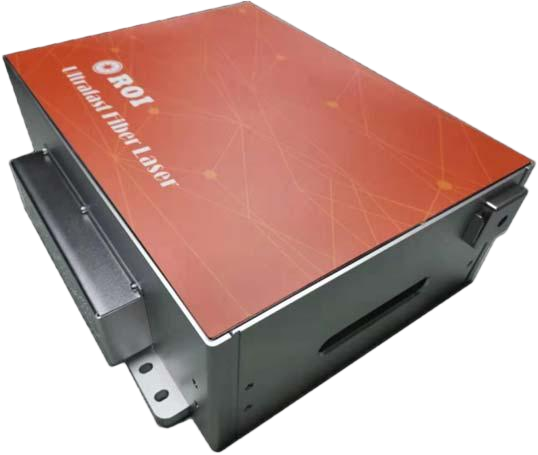
I realized we couldn't win this with brute force; we needed a leaner, highly specialized architecture. I turned to VenusLab to assemble a bespoke optical pipeline. To cut through the temporal blur, we deployed a YbFemto-532 ProL. Its ultrashort pulse acts like a lightning-fast reconnaissance unit, injecting carriers and probing their relaxation pathways before non-radiative losses can obscure the data.
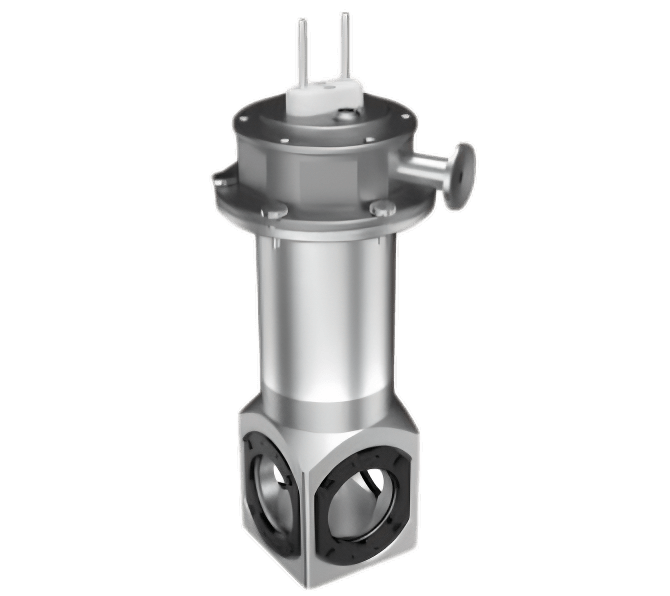
However, capturing clear intelligence requires absolute environmental control. By integrating a high-precision Multi-window Heating and Cooling Stage for Spectrometer, we locked down the thermodynamics. Freezing the sample down to cryogenic temperatures suppressed the phonon scattering, effectively clearing the thermal 'fog' and sharpening our excitonic peaks to laser precision.
Capturing the Invisible
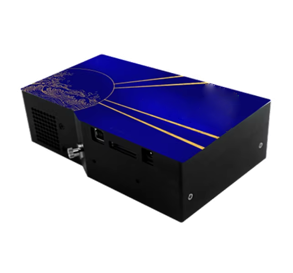
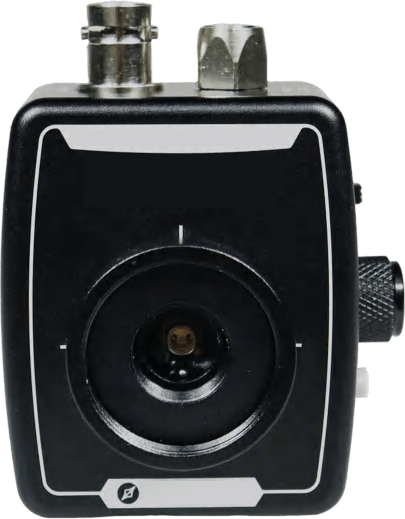
The final piece of the puzzle was upgrading our detection capabilities. We swapped out our standard silicon sensors for a highly sensitive Si-APD-AG AV Photodetector, allowing us to detect single-photon events from monolayer flakes with absolute certainty. Coupling this with a high-resolution CryoRange Ultra Spectrometer provided the spectral clarity needed to distinguish between neutral excitons and charged trions without hesitation.
The Victory of Clear Data
The turning point was instantaneous. When the first Time-Resolved Photoluminescence (TRPL) curve rendered on my monitor, the contrast was staggering. What used to be a muddy, noisy decay was now a pristine, multi-exponential fit detailing the exact lifetimes of different carrier populations. By resolving these ultrafast dynamics across varying temperatures, we successfully mapped the energy landscape of our perovskite samples. There is a profound satisfaction in finally seeing the invisible battlefield clearly—it gives us the absolute confidence to push our material designs forward.